Sustainable Practices for Farming Around Forests
Sarmiento, Aneth
Centro de Producción e Investigaciones Agroindustriales (CEPIA),
Universidad Tecnológica de Panamá
Ciudad de Panamá, Panamá
García, Karina
Facultad de Ingeniería Civil, Universidad Tecnológica de Panamá
Ciudad de Panamá, Panamá
Añino, Yostin
Departamento de Biología, Universidad de Panamá
Ciudad de Panamá, Panamá
Carrera, Jean-Paul
Centro Carson de Investigación en Salud y Ecosistemas
Darién, Panamá
Sanchez-Galan, Javier E.
Facultad de Ingeniería de Sistemas Computacionales
Universidad Tecnológica de Panamá
Ciudad de Panamá, Panamá
https://doi.org/10.33412/apanac.2025.89
Abstract
Many rural families living near forested areas depend heavily on agriculture as their primary or only source of income. This reality requires not only ecological awareness but economically viable alternatives that respond to local needs. This paper examines the challenges and opportunities for sustainable agriculture in communities adjacent to forested areas in Panama. It proposes a methodological framework to identify and promote sustainable farming practices that enhance ecosystem services, improve farm resilience, and support the livelihoods of rural communities. The proposed methodology integrates spatial analysis, stakeholder mapping, and the development of a longitudinal survey to assess the adoption and impact of sustainable practices. The expected results include the identification of critical areas for intervention, a comprehensive understanding of the socio-ecological context, and the development of a tailored guide for sustainable farming practices. This work promotes a dignosis to favor the broadening of sustainable agricultural practices integrated into forested landscapes, recognizing forests not merely as boundaries but as active allies for resilient and productive farming. In alignment with global sustainability goals, climate governance and support the One Health approach, which links ecosystem integrity ith human and animal well-being.
Keywords: Sustainable agriculture, Forest conservation, One Health, Climate resilience, Stakeholder engagement, Panama.
Resumen
Muchas familias rurales que viven cerca de áreas boscosas dependen de la agricultura como su fuente principal o ùnica de ingresos. Esta realidad requiere no solo conciencia ecológica, sino también alternativas económicamente viables que respondan a las necesidades locales. Este artículo examina los desafíos y oportunidades para la agricultura sostenible en comunidades adyacentes a áreas boscosas en Panamá. Se propone un marco metodológico para identificar y promover prácticas agrícolas sostenibles que mejoren los servicios ecosistémicos, aumenten la resiliencia de las fincas y apoyen los medios de vida de las comunidades rurales. La metodología propuesta integra análisis espacial, mapeo de actores y el desarrollo de una encuesta longitudinal para evaluar la adopción y el impacto de las prácticas sostenibles. Los resultados esperados incluyen la identificación de áreas críticas para la intervención, una comprensión integral del contexto socioecológico y el desarrollo de una guía adaptada para prácticas agrícolas sostenibles. Este trabajo promueve un diagnóstico para favorecer la ampliación de las prácticas agrícolas sostenibles integradas en los paisajes boscosos, reconociendo los bosques no solo como límites, sino como aliados activos para una agricultura resiliente y productiva. En línea con los objetivos de sostenibilidad global, la gobernanza climática y el apoyo al enfoque de Una Salud, que vincula la integridad de los ecosistemas con el bienestar humano y animal.
Palabras claves: Agricultura sostenible, Conservación de bosques, Una Salud, Resiliencia climática, Participación de actores, Panamá.
1. Introduction
The expansion of the agricultural frontier in Panama has caused severe damage to forest ecosystems, compromising their ecological integrity and reducing the availability of critical ecosystem services such as water regulation, nutrient cycling, and functional biodiversity [1, 2]. This issue is particularly acute in regions like Darién, Bocas del Toro, Chiriquí, and Veraguas, where conventional agricultural models have promoted deforestation, soil degradation, and the excessive use of agrochemicals. These trends not only affect environmental quality but also threaten food security and long-term rural livelihoods.
This work emerges from the collaborative workshop “Climate Change and Planetary Health: A Panamanian Perspective” organize in the framework of McGill PRISM Initiative [3]. The workshop focused on the intricate interplay between climate change and planetary health in Panama. The workshop highlighted the broader implications for infectious and zoonotic diseases, the impact of land use and farming practices on biodiversity and disease dynamics, and the vulnerability of Panama’s water systems to climate variability. This context underscores the need for a holistic understanding of the environmental and health challenges Panama faces and the importance of actionable approaches for sustainable resilience.
This manuscript promotes a diagnosis to favor the broadening of sustainable agricultural practices integrated into forested landscapes, recognizing forests not merely as boundaries but as active allies for resilient and productive farming. In alignment with global sustainability goals, climate governance and support the One Health approach, which links ecosystem integrity with human and animal well-being.
2. Methods
The proposed methodology is articulated in three main phases:
A. Spatial Analysis
Perform a documentary review and analysis of structured measures, plans, legal frameworks and projects within the country, that apply good practices in climate resilience and environmental sustainability farming already in place. Considering the important role of conservation in maintaining ecosystem services to improve agricultural yields, restore essential ecological functions and foster climate-smart land management and planetary health, the use of geographic information systems is proposed to locate areas of overlap between protected areas and agricultural activities within 20 km of them.
B. Stakeholder Recognition
Once critical areas of interventions have been identified, develop a stakeholder map of relevant actors in these areas with potential and/or who have implemented environmental sustainability measures. Through the application of a Stakeholder Mapping methodology, a list of actors within the intervention areas is being developed, identifying those who play key roles in the implementation, governance, and evaluation of progress in sustainable agroecological practices in the target region. Once consolidated, these stakeholders will be invited to participate in a Longitudinal Survey.
C. Survey development and validation
Following a careful analysis of the selected criteria, a draft longitudinal survey questionnaire will be developed to enable repeated data collection from the same participants over time. A consultation process with external experts (including epidemiologists, biologists, social scientists, and specialists in socioeconomic and financial data) will be undertaken to ensure the questionnaire captures information relevant to a comprehensive One Health evaluation. After this multidisciplinary review and refinement, the instrument will be validated and submitted for bioethical evaluation.
The complete methodological framework is show in Figure 1.
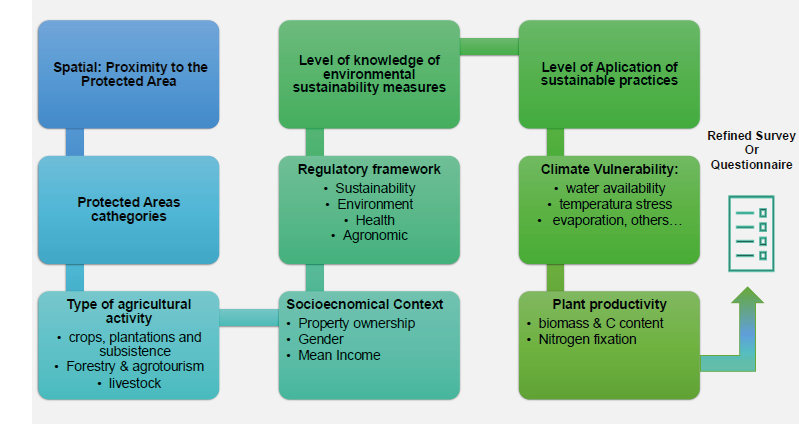
Figure 1. Proposed Methodology for Survey definition.
3. RESULTS
The expected results of this research are:
- Identification of critical areas for intervention: Analyzing multiple layers (land use, protected areas, satellite imagery, DEMs) in territories allows to identify the critical areas to intervene.
- A comprehensive understanding of the socio-ecological context: The individual results of the interviews will be assessed to develop a tailored Guide to key actors that encompass specific measures for application and monitoring of sustainable farming practices in the region, and property owners.
- A tailored Guide for sustainable farming practices: The guide will provide recommendations for agroforestry, chemical composition alteration in soil, enhancing biodiversity ecosystem services and water provisioning under climate change.
4. Conclusions
This collaboration demonstrates how integrating physiological, ecological, geophysical, climate, health, and socio-environmental knowledge can transform rural land use into an effective tool for conservation and resilience. Validation of the methodological framework, followed by its further application, will enable the assessment of its utility as a tool for promoting sustainable agronomic practices in conservation areas, supporting technical, scientific, and governance decision-making. The approach promotes the scaling of bottom-up strategies aligned with international frameworks on climate change, biodiversity conservation, and health policies. By implementing such nature-based solutions, farmers of varying scales can actively contribute to the protection of forest ecosystems while securing their livelihoods over the long term.
Acknowledgements
This work was made possible through the collaborative efforts of several institutions and researchers. We extend our sincere gratitude to the Universidad Tecnológica de Panamá, the Centro Carson de Investigación en Salud y Ecosistemas, and the Universidad de Panamá for their institutional support.
We also acknowledge the funding and support from the UNESCO Chair for Dialogues on Sustainability, the Panama Research and Integrated Sustainability Model (PRISM), the NIH-Agroforestry Project, and the Sistema Nacional de Investigación (SNI) of Panama.
The initial conceptualization of this research was developed during the McGill University PRISM Workshop 2024, held on November 25-26 at the Summit Rainforest and Golf Resort in Panama. We thank the organizers and the 33 participants from six different projects who contributed to a rich, interdisciplinary dialogue that was foundational to this study.
References
- Clayton, S. (2022). 2022: Technical Summary. Climate change 2022: impacts, adaptation and vulnerability: contribution of Working Group II to the sixth assessment report of the intergovernmental panel on climate change.
- UNDRR (2021) Regional Assessmente Report on Disaster Risk in Latin America and the Caribbean, United Nations Office for Disaster Risk Reducction (UNDRR)
- Wolmuth-Gordon, H., & Mutebi, N. (2023). Public health and climate change: A One Health approach.
Autorización y Licencia CC
Los autores autorizan a APANAC XX a publicar el artículo en las actas de la conferencia en Acceso Abierto (Open Access) en diversos formatos digitales (PDF, HTML, EPUB) e integrarlos en diversas plataformas online como repositorios y bases de datos bajo la licencia CC:
Attribution-NonCommercial-ShareAlike 4.0 International (CC BY-NC-SA 4.0) https://creativecommons.org/licenses/by-nc-sa/4.0/.
Ni APANAC XX ni los editores son responsables ni del contenido ni de las implicaciones de lo expresado en el artículo.