Analysis of the impact of emerging technologies and Fab Labs on higher education
Ng Corrales, Lisbeth del Carmen
Universidad Tecnológica de Panamá
Ciudad de Panamá, Panamá
https://orcid.org/0000-0001-7811-4647
Hernandez Korner, Mario Enrique
Universidad Tecnológica de Panamá
Ciudad de Panamá, Panamá
https://orcid.org/0000-0003-1900-3351
https://doi.org/10.33412/apanac.2025.55
Abstract
The Industry 4.0 movement, driven by emerging technologies, offers new opportunities for knowledge transfer, fostering innovation and entrepreneurship. Fab Labs, exemplify this trend by promoting collaboration between learners and experts. In Latin America, the Fab Lab phenomenon manifests in diverse ways, providing platforms for skill development and problem-solving across various sectors. This article evaluates the impact of emerging technologies and Fab Labs in higher education, with a specific focus on Central and South America. Data was gathered from the Fab Foundation, along with a selected sample of Fab Labs across the region. The analysis examined installations, areas, equipment, purpose, and fabrication spaces. This diversity found reflects how Fab Labs adapt to the unique needs of their communities, contributing to the development of technical skills and boosting localized innovation. An impact model was developed to describe the contribution of Fab Labs to innovation, education, and entrepreneurship in Latin America.
Keywords: Fab Lab, emerging technologies, higher education, STEAM, Latin America, education
Resumen
El movimiento de la Industria 4.0, impulsado por tecnologías emergentes, abre nuevas oportunidades para la transferencia de conocimiento, fomentando la innovación y el emprendimiento. Los Fab Labs representan esta tendencia al facilitar la colaboración entre aprendices y expertos. En América Latina, los Fab Labs se adaptan a las necesidades locales, ofreciendo plataformas para desarrollar habilidades y resolver problemas en diversos sectores. Este artículo analiza el impacto de las tecnologías emergentes y los Fab Labs en la educación superior, centrado en América Central y del Sur. Se recopilaron datos de la Fab Foundation y de una muestra de Fab Labs regionales, examinando instalaciones, áreas, equipamiento y propósitos. Los resultados reflejan cómo estas iniciativas impulsan el desarrollo técnico y la innovación local. Además, se diseñó un modelo de impacto para explicar su contribución a la innovación, la educación y el emprendimiento en la región.
Palabras claves: Fab Lab, tecnologías emergentes, educación superior, STEAM, Latinoamérica, educación.
1. Introduction
Various technological sectors like 3D printing, robotics, and electronics included in a digital fabrication environment are game-changing in education. According to the Fab Foundation, a Fab Lab is a digital fabrication laboratory, the educational outreach of MIT’s Center for Bits and Atoms[1]. A Fab Lab comprises, among other things, a technical prototype platform for innovation and entrepreneurship. Learners and instructors have a safe space to play, create, and invent. Nowadays, there is a global network of Fab Labs based on an international cooperation program that is established in around 100 countries and 24 different time zones [1]. Fab Academy provides support in technical and research investigations for applications in digital fabrication as an educational and training path for the network. There is a basic configuration for a formerly Fab Lab established by the Fab Foundation. However, depending on the project budget and work line there were various FabLab configurations including the size of the equipment, technical capabilities, purpose, and fabrication areas.
The objective of this article is to evaluate the impact of emerging technologies and Fab Labs in higher education, with a particular focus on Central and South America. It seeks to identify how these tools and digital fabrication spaces influence the teaching process and how they have been incorporated into the educational environment. Likewise, the article aims to explore, through a state-of-the-art, the distribution of Fab Labs in universities, schools, and independent institutions, as well as the sections and services they offer.
2. Materials and methods
A systematic literature review was performed using the PRISMA statement to evaluate the implementation of emerging technologies in Fab Labs and their impact. The database selected was SCOPUS [2] due to the relevance to the scientific community and accesibility. The following terms were used for the search “TITLE-ABS-KEY(“Fab Lab” OR “FabLab”) AND (“digital fabrication”) AND (“University”)”. It returned 196 results, after applying exclusion criteria 30 results were obtained and analyzed. Moreover, information was collected from the Fab Foundation database. The analysis is centered on Fab Labs from countries in Central and South America. Fab Labs in Latin American countries were considered relevant in terms of turnover, investment, and independent financial support obtained from its operation [3]. A representative sample of 25% of the Fab Labs in each country was randomly selected to obtain a detailed overview of the facilities and equipment available. Data on installations, areas, equipment, purpose, and fabrication space were collected and analyzed from this sample. The classification of Fab Labs follows criteria used in previous studies in the field [4], [5], though not limited to them.
3. Results
In Central and South America there are approximately 363 Fab Labs distributed in 20 countries. The geographic distribution of Fab Labs shows a concentration in major cities and metropolitan areas, reflecting the need for these spaces in environments with higher population density and economic activity. Table 1 shows the top 10 countries with the largest number of Fab Labs. Brazil stands out with a total of 179 Fab Labs, representing 49% of the total in the region, followed by Peru with 46 (13%), Chile and Colombia with 22 (6%).
Table 2. Top 10 countries with the highest number of fab labs instalments
|
N |
Country |
# FabLab |
Percentage |
N |
Country |
# FabLab |
Percentage |
|
|
1 |
Brazil |
179 |
49,31% |
6 |
Ecuador |
15 |
4,13% |
|
|
2 |
Peru |
46 |
12,67% |
7 |
Costa Rica |
12 |
3,31% |
|
|
3 |
Chile |
22 |
6,06% |
8 |
Panama |
8 |
2,20% |
|
|
4 |
Colombia |
22 |
6,06% |
9 |
Guatemala |
7 |
1,93% |
|
|
5 |
Argentina |
21 |
5,79% |
10 |
El Salvador |
6 |
1,65% |
Source: Data extracted from the Fab Foundation, 2024
The presence of Fab Labs in countries such as Brazil, Peru, Chile, Colombia, and Argentina are influenced by factors including economic and technological development, supportive public policies on innovation and entrepreneurship, and educational and societal demand. A 25% sample of laboratories in each country was analyzed to assess services provided, with many Fab Labs operating within universities and schools for educational purposes. However, service availability varies depending on each lab’s focus. University-based Fab Labs stand out for their strong technological infrastructure that supports early design and prototyping activities [6]. The most common services include 3D printing (100%), laser cutting (98%), CNC routing (92%), and electronics (85%), highlighting their importance in digital manufacturing, rapid prototyping, and IoT-related projects. Other services such as vinyl cutting (40%), embroidery (16%), and stamping (4%) reflect applications in textiles and crafts, while emerging tools like 3D scanning and drones show increasing adoption (Figure 1).
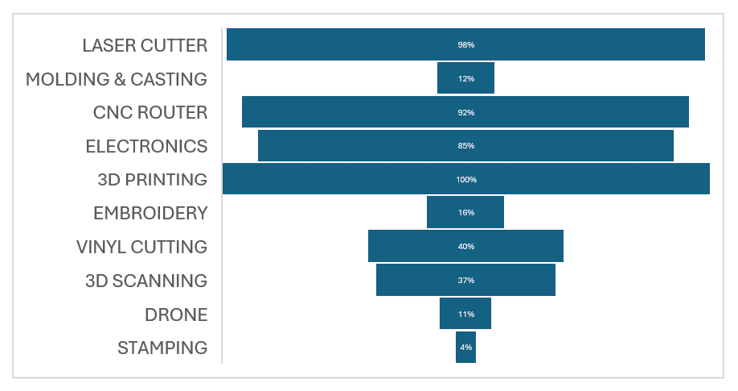
Figure 1. Sections and proportions between the Fab Lab examined. Sources: Data extracted from the Fab Foundation, 2024.
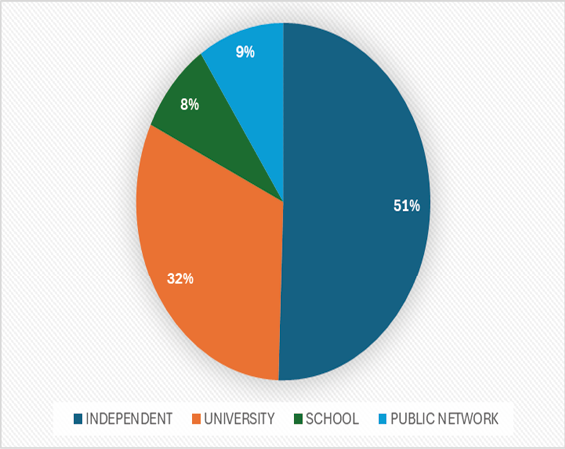
Figure 2. Percentage of Fab Labs by type of sponsoring institution. Source: Data extracted from the Fab Foundation, 2024
In Central and South America, Fab Labs play a vital role in higher education by fostering innovation and practical learning. Approximately 32% are sponsored by universities, 8% by schools, 51% operate independently, and 9% belong to public networks such as Brazil’s (Figure 2). University Fab Labs promote research, technology transfer, and workforce training, while school-based labs enhance STEAM education. Independent and public Fab Labs contribute to social innovation, inclusion, and equitable access to technology across communities.
Generic model proposal for Fab Lab impact
Through the previously mentioned characteristics and the positive impact on knowledge transfer promoted by university-supported Fab Labs, we propose a generic model that illustrates the impact generated by a Fab Lab in these environments. Figure 3 shows a diagram that illustrates this model.
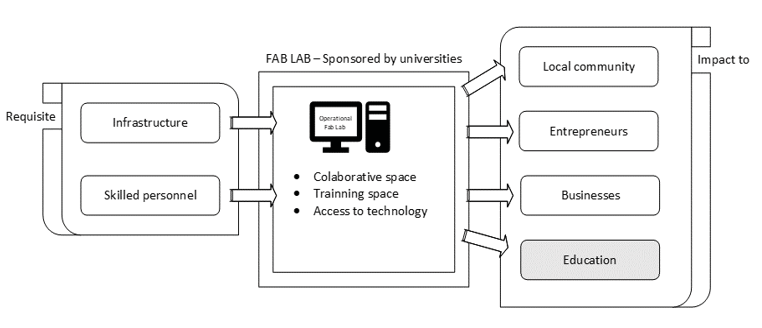
Figure 3. Generic diagram of the impact of university-supported Fab Lab
The model requires two inputs. The first one is the availability of an adequate infrastructure that includes both the physical space and the necessary equipment and tools. Concerning the physical space, it must be efficiently distributed, have adequate lighting, and ventilation to facilitate the development of collaborative activities. Although a FabLab requires minimal technological equipment, it is essential to consider the specific purpose of the laboratory to provide it with the equipment that meets that purpose. In a study performed by Ha Duc Ngoc et al. about the use of emerging technologies as educational tools in higher education. States that is important the participation and support of the institutional leaders [7] to obtain the infrastructure, necessary equipment, and encourage teachers in the use of these emerging technologies for education.
The second is to have human resources trained in the use of digital manufacturing technologies. It is necessary to have qualified personnel to coordinate the activities within the laboratory, specialized technicians to maintain and operate the equipment, as well as teachers to provide training to users.
The primary objective of a university-promoted Fab Lab is to encourage activities such as collaborative spaces, hands-on learning, access to technologies, rapid prototyping, and R&D culture, as well as education and training for the entire student community. Additionally, advisory and consulting services can be offered to address community issues, promoting student participation in research.
Fab Labs produces a significant impact on education, which is reflected in companies, entrepreneurs, and the community. Businesses benefit from trained personnel and specialized services in product prototyping, design, and manufacturing. Similarly, entrepreneurs could prototype and design their products, in addition to having a collaborative space for managing their business ventures. Moreover, the community has a social benefit, gaining inclusion and access to technology, which can be used to solve community problems and improve the quality of life.
Finally, the proposed Fab Lab model effectively integrates the essential components of infrastructure, skilled human resources, and specialized services. By providing an environment that encourages collaboration, innovation, and technological development, Fab Labs not only enhances education and talent training, but also generates a positive impact on businesses, entrepreneurs, and the local community. This holistic approach ensures that the Fab Lab is a key tool for knowledge transfer, driving economic development, and social growth through inclusion and access to advanced technologies. In this way, Fab Labs consolidate themselves as catalysts for progress and sustainable development in their respective environments.
4. CONCLUSION
Fab Labs in Central and South America offers a wide range of services covering diverse digital manufacturing and technology education needs. The high prevalence of technologies such as 3D printing and laser cutters highlights their relevance and usefulness in the region. On the other hand, more specialized services such as embroidery, foundry, and drones suggest areas of growth and specialization in certain labs. The variability in the services offered reflects the adaptation of each FabLab to the specific needs and objectives of their communities, thus contributing to the development of technical skills and boosting local innovation.
Fab Labs are transforming higher education by providing students with access to advanced digital fabrication tools. These labs enable the practical application of theories, encouraging creativity and innovation. They also facilitate interdisciplinary collaboration, essential in training professionals capable of meeting the challenges of the 21st century [8].
With the highest number of Fab Labs in the region, Brazil has experienced a significant impact on its educational institutions. Several universities are integrating Fab Labs into their engineering, architecture, and design programs, enhancing the educational experience, and preparing students for the job market. In addition, they are promoting the inclusion of these tools from early stages, allowing high school students to experience a maker environment in an integrated way with their curricular activities.
Fab Labs not only offers access to advanced tools but also provides a collaborative environment where individuals from diverse disciplines can work together on innovative, customized, and sustainable projects. Fab Labs have had a significant impact on various sectors, including business, local community, entrepreneurs, and education. This impact has driven economic growth, social inclusion, and the preparation of new generations to face the challenges of the future. These labs provide support through services such as rapid prototyping, innovation, talent training, access to technology, mentoring, and collaborative spaces, among others.
At a higher education level, it has demonstrated a positive impact on aspects such as: stimulating creativity and research, development of technical skills, collaborative and multidisciplinary work, problem-solving and critical thinking, preparation for the labor market.
The Fab Labs sponsored by higher education institutions is a growing trend that offers multiple benefits for students and institutions. It is important to continue promoting the creation and development of these spaces, ensuring their accessibility and the adequate training of teaching staff, which will be essential to maximize their educational potential and contribute to the sustainable development of the region.
The analysis of the impact of Fab Labs in university environments opens a range of possibilities for future studies that delve into various aspects of these initiatives and their transformative potential. It is suggested to evaluate the long-term impact of the use of Fab Labs on students learning, including their academic performance, transversal skills, employability, and professional development. A study may also be considered to analyze the role of Fab Labs in the development of an entrepreneurial ecosystem within universities, including the creation of startups, technology transfer, and innovation culture. Conducting these studies will allow optimizing the operation of these spaces, maximizing their transformative potential, and contributing to the integral development of universities and the surrounding communities.
References
- The Fab Foundation, “Getting Started with Fab Labs.” Accessed: Jul. 05, 2024. [Online]. Available: https://fabfoundation.org/getting-started/#fablabs-full
- A. Aghaei Chadegani et al., “A comparison between two main academic literature collections: Web of science and scopus databases,” Asian Soc Sci, vol. 9, no. 5, pp. 18–26, 2013, doi: 10.5539/ass.v9n5p18.
- G. Santos, F. Murmura, and L. Bravi, “Fabrication laboratories: The development of new business models with new digital technologies,” Journal of Manufacturing Technology Management, vol. 29, no. 8, pp. 1332–1357, 2018, doi: 10.1108/JMTM-03-2018-0072.
- M. Savastano, F. Bellini, F. D’Ascenzo, and E. Scornavacca, “FabLabs as Platforms for Digital Fabrication Services: A Literature Analysis,” in EXPLORING SERVICES SCIENCE, IESS 2017, Za, S and Dragoicea, M and Cavallari, M, Ed., in Lecture Notes in Business Information Processing, vol. 279. GEWERBESTRASSE 11, CHAM, CH-6330, SWITZERLAND: SPRINGER INTERNATIONAL PUBLISHING AG, 2017, pp. 24–37. doi: 10.1007/978-3-319-56925-3_3.
- M. E. García-Ruiz and F. J. Lena-Acebo, “FabLabs: The Road to Distributed and Sustainable Technological Training through Digital Manufacturing,” Sustainability (Switzerland), vol. 14, no. 7, 2022, doi: 10.3390/su14073938.
- V. J. Botleng, “Aligning cognitive processes with the design process in a University-based digital fabrication laboratory ( Ub-Fablab ) To cite this version : HAL Id : tel-02000670 DOCTEUR DE L ’ UNIVERSITÉ DE BORDEAUX Par Vomaranda Joy BOTLENG Aligning Cognitive process,” Theses, Université de Bordeaux, 2019. [Online]. Available: https://theses.hal.science/tel-02000670
- H. Ben Rejeb and B. Roussel, “Perspectives on the evolution of a fabrication laboratory in an emerging country: a comparative lexicometric study of European FabLabs,” Journal of Manufacturing Technology Management, vol. 33, no. 2, pp. 399–422, 2022, doi: 10.1108/JMTM-01-2021-0007.
- L. Striukova and T. Rayna, “Fostering Skills for the 21st Century: The Role of Fab Labs and Makerspaces,” Academy of Management Proceedings, vol. 2019, no. 1, p. 16767, Aug. 2019, doi: 10.5465/AMBPP.2019.16767ABSTRACT.
Autorización y Licencia CC
Los autores autorizan a APANAC XX a publicar el artículo en las actas de la conferencia en Acceso Abierto (Open Access) en diversos formatos digitales (PDF, HTML, EPUB) e integrarlos en diversas plataformas online como repositorios y bases de datos bajo la licencia CC:
Attribution-NonCommercial-ShareAlike 4.0 International (CC BY-NC-SA 4.0) https://creativecommons.org/licenses/by-nc-sa/4.0/.
Ni APANAC XX ni los editores son responsables ni del contenido ni de las implicaciones de lo expresado en el artículo.